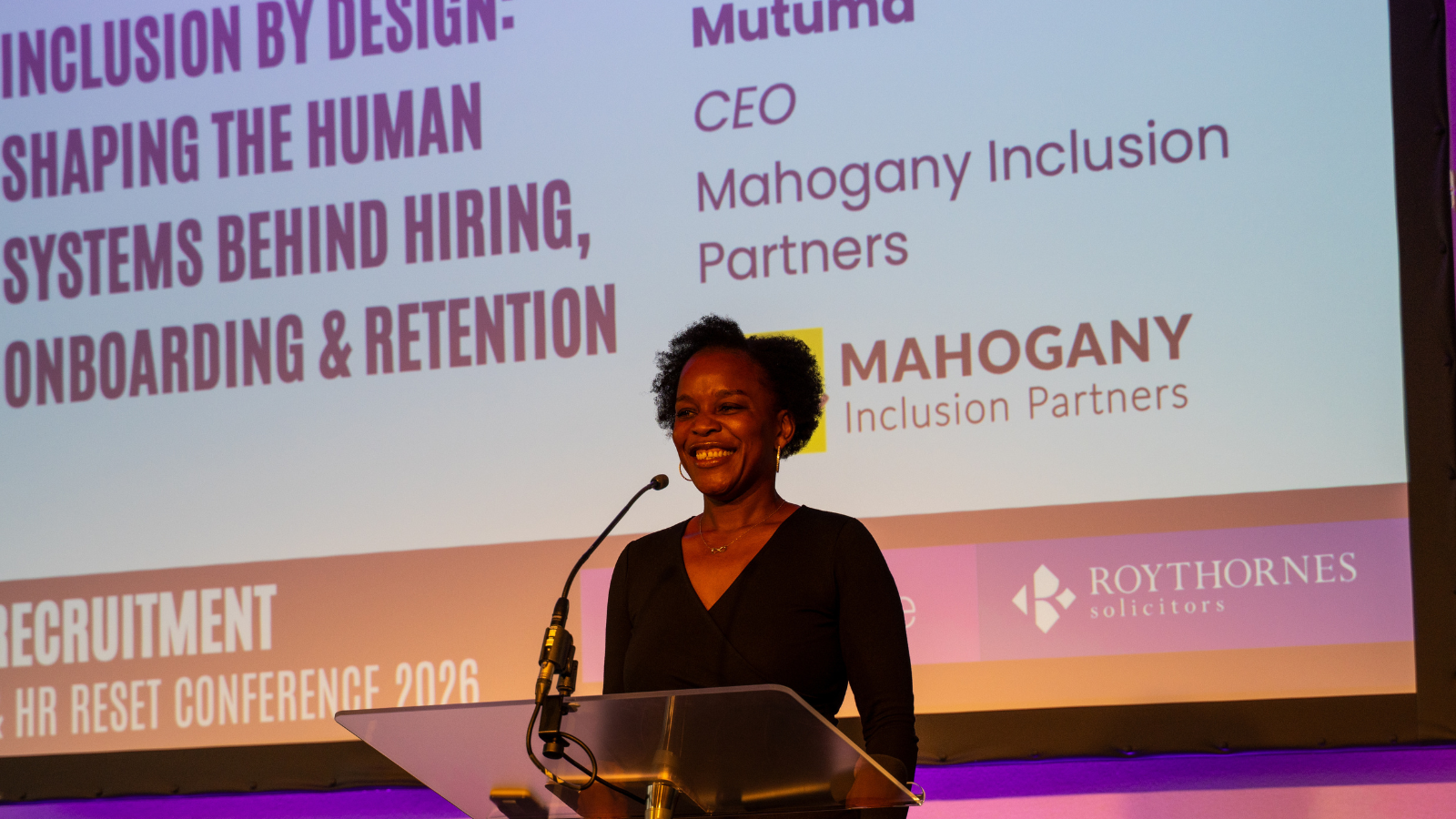
Inclusion by Design: Shaping the Systems Behind Hiring, Onboarding and Retention
Insights from Aggie Yemurai Mutuma at the HR & Recruitment Reset Conference hosted by MorePeople and Roythornes.
Inclusion is often framed as an initiative. A programme. Something extra organisations try to “add in”.
But what if inclusion isn’t extra work at all?
At the HR & Recruitment Reset Conference, Aggie Yemurai Mutuma challenged HR and business leaders to rethink inclusion not as a compliance exercise or cultural aspiration, but as a decision-making system embedded into everyday management. One that supports new hires and helps enable a successful onboarding in a time when keeping new hires is more important than ever.
Her core question was simple:
Are our decisions fair, consistent and evidence-based - even when we’re under pressure?
In fast-paced sectors like food production, fresh produce and manufacturing, managers are often operating under constant pressure. Teams can be short-staffed, agency workers rotate frequently, and production targets don’t move. When things get busy, what’s sometimes labelled the “soft stuff” can slip down the priority list. But those pressured moments are exactly where inclusion matters most.
Grievances, disputes and avoidable resignations rarely appear when everything is calm and well-resourced. They tend to surface when:
Expectations aren’t clear
Managers apply standards inconsistently
Assumptions replace evidence
Early frustrations go unspoken
Designing inclusive systems reduces ambiguity and uneven treatment. In turn, that strengthens trust and reduces the need for HR to step in later to resolve avoidable problems.
The “Manager Lottery”
Most organisations recognise the manager lottery. Some managers communicate clearly, follow processes and actively develop their teams. Others may be less consistent or more reactive. Many fall somewhere in the middle.
The issue isn’t that variation exists. It’s where it shows up:
Recruitment decisions
Onboarding experiences
Probation reviews
Performance management
Career progression
Inclusion by design reduces reliance on individual management style and replaces it with clear, consistent systems that support better decision-making.
Why the First 90 Days Matter
Recruitment doesn’t end when a candidate signs their contract. Real success is someone still engaged, productive and clear about their role 12 months later. The first 90 days shape what Aggie described as the “emotional contract” - the unspoken expectations about fairness, support and opportunity. When new hires leave early, the cause is rarely dramatic. More often it comes down to:
Expectation drift The job description reflects a role from years ago, while the day-to-day reality looks different.
Manager inconsistency Different managers apply different standards and levels of support.
Early silence Questions aren’t asked, feedback isn’t given, and small frustrations quietly build.
By the time HR becomes involved, the problem has often been developing for weeks.
Inclusion as a Practical Decision Framework
Aggie encouraged leaders to view inclusion through a practical lens:
Culture is how decisions are made
Inclusion is who benefits from those decisions
Compliance is whether those decisions are consistent and defensible
In practice, they are the same system.
When someone says, “I wasn’t treated the same as others,” organisations are suddenly dealing with culture, inclusion and compliance all at once.
To support better decisions, Aggie shared a simple framework managers can apply:
What decision are we actually making?
What does good performance look like in observable terms?
Where might gut feel be influencing the decision?
How have we set this person up to succeed?
What is the minimum fair and consistent standard?
The goal isn’t perfection. It’s making decisions that are clear, fair and defensible.
Systems Matter More Than Values
One of the most powerful takeaways from the session was this: “We don’t rise to our values. We fall to our systems.”
Many organisations proudly promote their values externally, but values alone don’t guarantee consistent behaviour. Systems do.
If a decision were challenged tomorrow, could you demonstrate it was:
Fair
Consistent
Evidence-based
If not, the system - not the individual - may need attention.
A Final Thought
Inclusion by design isn’t about slowing organisations down. It’s about building human systems that still work under pressure.
When expectations are clear, feedback happens early, and decisions are consistent, organisations see stronger retention, better productivity and fewer avoidable HR issues.
And it all starts with one question:
Are we fair, consistent and evidence-based every time?